

 Rafraîchir
Early Detection and Diagnosis of Autism - Infographic
Vous souhaitez remporter un projet comme celui-ci ?
Ce client a reçu 13 designs infographie de la part de 4 designers. Il a choisi ce design infographie de Sarina.dsg comme design gagnant.
Inscrivez-vous Trouvez des Projets de Design
-
 US$100
-
 13 designs
-
 4 designers
Brief de Design Infographie
Our colors are blue, yellow, and green. A brand color pallette will be attached.
Here is all the information we want to have on our infographic:
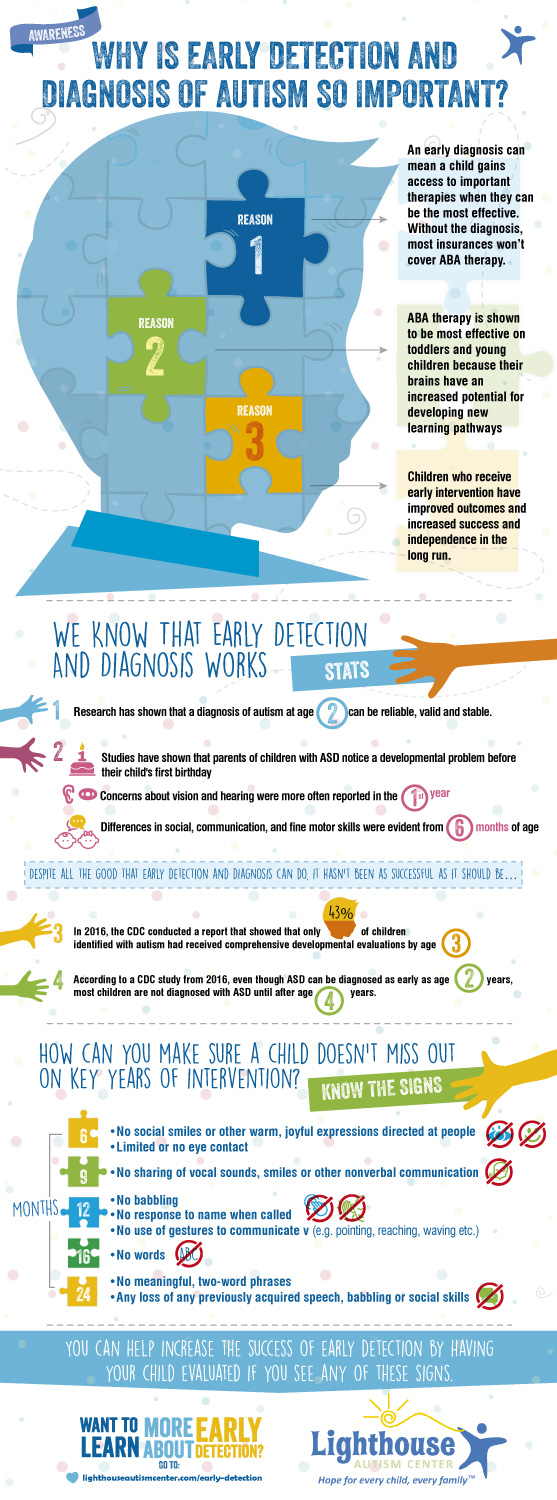
Title: Why is Early Detection and Diagnosis of Autism So Important?
Reason 1: An early diagnosis can mean a child gains access to important therapies and resources when they can be the most effective. Without the diagnosis, most insurances won’t cover treatments like ABA therapy.
Reason 2: ABA therapy is shown to be most effective on toddlers and young children because their brains are not completely developed and have an increased potential for developing new learning pathways.
Reason 3: Children who receive early intervention have improved outcomes and increased success and independence in the long run.
We know that early detection and diagnosis works…
Stat 1: Research has shown that a diagnosis of autism at age 2 can be reliable, valid and stable.
Stat 2: Studies have shown that parents of children with ASD notice a developmental problem before their child’s first birthday. Concerns about vision and hearing were more often reported in the first year, and differences in social, communication, and fine motor skills were evident from 6 months of age.
Despite all the good that early detection and diagnosis can do, it hasn’t been as successful as it should be…
Stat 3: In 2016, the CDC conducted a report that showed that only 43 percent of children identified with autism had received comprehensive developmental evaluations by age 3.
Stat 4: According to a CDC study from 2016, even though ASD can be diagnosed as early as age 2 years, most children are not diagnosed with ASD until after age 4 years.
How can you make sure a child doesn’t miss out on key years of intervention? KNOW THE SIGNS
• By 6 months, no social smiles or other warm, joyful expressions directed at people
• By 6 months, limited or no eye contact
• By 9 months, no sharing of vocal sounds, smiles or other nonverbal communication
• By 12 months, no babbling
• By 12 months, no use of gestures to communicate (e.g. pointing, reaching, waving etc.)
• By 12 months, no response to name when called
• By 16 months, no words
• By 24 months, no meaningful, two-word phrases
• Any loss of any previously acquired speech, babbling or social skills
You can help increase the success of early detection by having your child evaluated if you see any of these signs.
Want to learn more about early detection?
Go to: lighthouseautismcenter.com/early-detection
Marché(s) Cible(s)
Moms and Dads of Children with Autism
Secteur / Type d'entité
Health Care
Styles de police à utiliser

Couleurs
Couleurs choisies par le client et à utiliser dans le design de logo:
Aspect
Chaque curseur illustre les caractéristiques de la marque client et le style que doit transmettre votre design de logo.
Élégant
Audacieux
Léger
Sérieux
Traditionnel
Moderne
Sympathique
Professionnelle
Féminin
Masculin
Coloré
Conservateur
Économique
Haut de gamme
Exigences
Doit avoir
- Great data visualization. Autism themed illustrations like puzzle pieces (a common theme in design work about autism). Need source file in PSD.


